Tourists nowadays are increasingly becoming interested in sites of diverse nature: religious-spiritual, cultural-art-heritage, ecological-nature & now new and upcoming rural, farm-agriculture, educational, wellness and other genres of tourism also.
Development of rural tourism creates opportunities for livelihood and employment for the rural people, including youth, women and artisans.
The Minister for Tourism, Subodh Kant Sahay is very keen on harnessing the tourism potential of the rural areas. He says that Rural Tourism gives a boost to rural economy and development, it benefits the community not only in terms of generating sustainable employment, but also provides growth opportunities near their homes.
In India, the development and promotion of tourism is primarily undertaken by State Governments/UT Administrations. However, under its Rural Tourism Scheme, Ministry of Tourism provides Central Financial Assistance (CFA) to them for activities involving development of rural tourism including propagation of the Gurukul process. Minister of State of Tourism, Sultan Ahmed in a written reply in Lok Sabha on today said that the Ministry had sanctioned CFA for tourism projects at 185 villages across the country.
Earlier, Sanjay Kothari, Additional Secretary, Ministry of Tourism had announced to the delegates at the International delegates at the Pravasi Bhartiya Divas 2012 that the ministry will be supporting rural tourism in a cluster of villages unlike the previous model of selecting one village in a region.
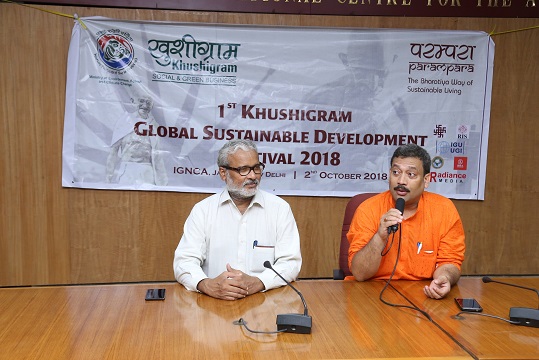
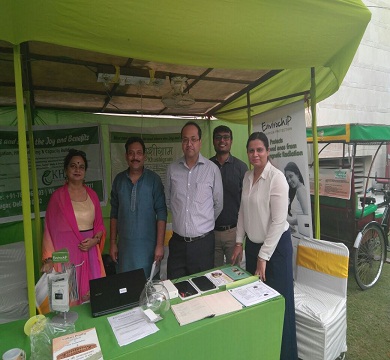
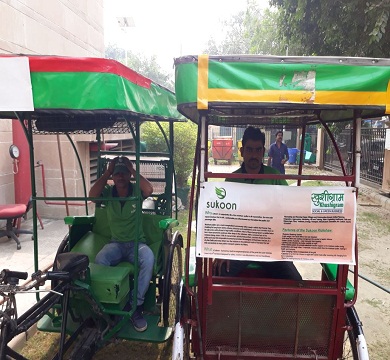
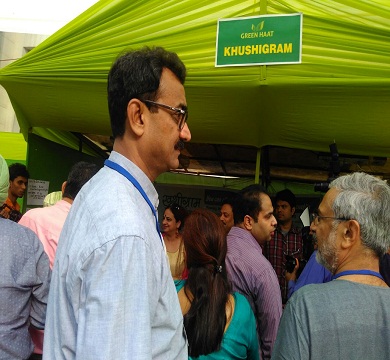
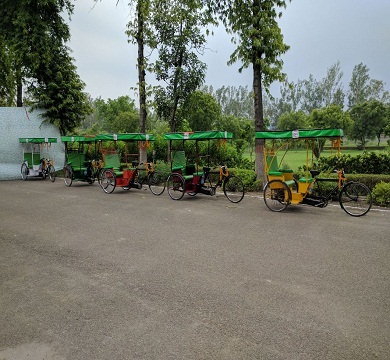
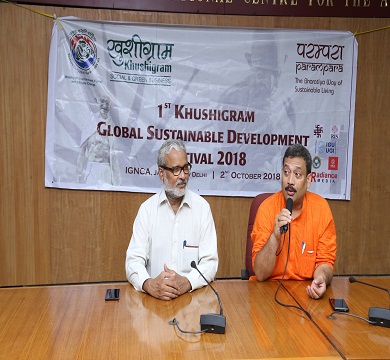
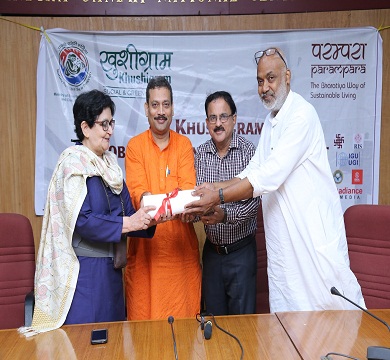
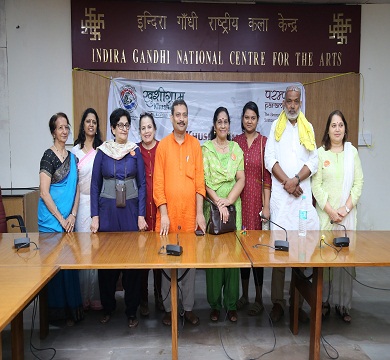
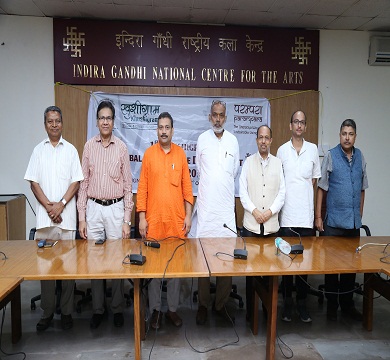
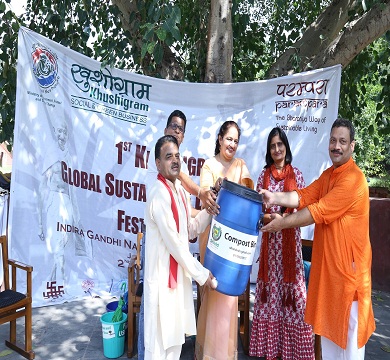
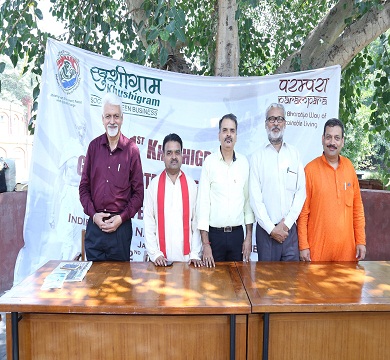
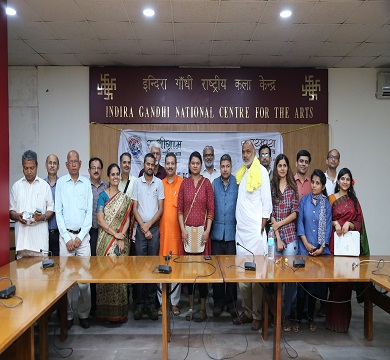
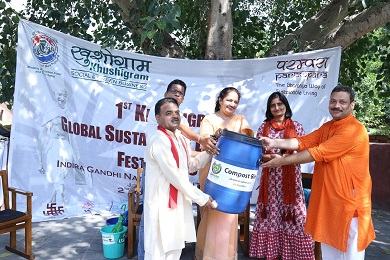
Then, there are some new sites planned as a social enterprise that has a network of about 30 progressive companies, institutions and organisations. Explaining about the concept of Khushigrams (Happy Villages), Kumar Amitabh, a key member of the social enterprise that seeks that to work in less developed states and areas and lead to holistic development, “People coming for Rural tourism should have full feel and taste of respective villages that have their uniqueness. This is different from the cities which are more homogenous and are more or less similar everywhere. In villages, tourists can get the shade of trees, pure riverside view, fresh, cool breeze, genuine human and rustic touch is only left in the villages and that’s what we have to offer. We want the people to rewind and go back a lot healthier and happier and rejuvenated.”
Initially Khushigrams would be opened in ten districts and the programme would be expanded, wherever local entrepreneurs are interested and are confident of feasibility and sustainability. .
Please feel free to write to us on ak.radiancemedia@gmail.com (400-800 words) and two photographs (300kb-3Mb size) about your development projects or any projects that you know of, so that we can help in spreading the good work.
The first stock-taking meeting of tiger-bearing countries on the Global Tiger Recovery Programme (15-17 May) started in Delhi today. India is hosting this meeting of about 150 delegates and experts from across the world. The workshop intends to set the agenda and negotiate and discuss the common factors to review conservation attempts.
Inaugurating the meeting, Natarajan said, "Our experience has highlighted the need for enlisting local public support, which is crucial for tiger conservation to succeed. The 'exclusive' tiger agenda of the core, complemented by the 'inclusive' multiple use strategy in the surrounding buffer areas have strengthened wild tiger conservation. Thus, the 'people agenda' ranks prominently in our 'tiger agenda'. While we do not imagine any coexistence in the inviolate core areas, a viable inclusive agenda involving local people is fostered in the surrounding buffer. As many as 25 lakh man-days are generated annually in various States under Project Tiger through involvement of local workforce. Besides, the Tiger Conservation Plan makes it a statutory obligation for addressing both the core and buffer areas."
World Bank President, Robert Zoellick in his video address to the delegates said, "This conference provides an opportunity to assess both the headway we've already made as well as the setbacks, to prioritize actions and define milestones for the next three years."
India’s Secretary, Environment and Forests, Dr T Chatterjee also reiterated the government’s stand: "Both at the global and at the national level, we have to research new mechanisms, which are more inclusive, where people are also involved in conservation."
Keshav Varma, programme manager for the World Bank led scheme said that India has sought assistance of $30 million under the Global Tiger Initiative.
Though, there were certain differences in approach as Varma suggested the US law on creating wilderness spaces - wildlife zones with no permanent human presence, whereas Jayanthi Natarajan, the Indian Environment and Forests Minister emphasized that conservation in India had to be more inclusive, involving and protecting the rights of people living in vicinity of forests.
The role of private sector in conservation efforts was also pointed out by Varma. This is also a point of concern as India has not allowed this despite interests of many companies and organisations in management of tiger reserves as they feel this will be a profitable business and also help in their branding as tiger tourism is becoming popular.
The conference and the agenda has become more significant for India as the government is expected to present fresh guidelines about regulating tourism around tiger reserves to the Supreme Court soon. The challenge is that though the population of tigers in India has increased since the last census, but the menace of poaching continues and 30 tigers have died in the last four months. Clearly the focus is on protecting tiger habitats, cracking down on poaching and wildlife trafficking and law enforcement in the protected areas.
Film Director–Producer Ajita Suchitra Veera is just adding finishing touches to her Feature Film ‘Ballad of Rustom’-an Original World Cinema Classic from India. Ajita-a bold and highly talented Director emerged on the national stage when her short film “Notes on Her” was nominated an Oscar Entry in the Honorary Foreign Film Category in 2003. Her films have been acclaimed for their visually beautiful, experimental and bold style of craftsmanship internationally. They are quite unique-unlike what we may have seen in India-and very much in the league of Old classics of World Cinema and with a powerful new contemporary edge which make her films novel, for filming standards in India.
An Alumnus of Film and Television Institute of India, Pune; Ajita now returns with a two hour long powerful first feature film ‘Ballad Of Rustom’ which recently had an exclusive preview for select world wide audience of Festival Directors, and International Distributors in International Film Festival Goa-2011 Nov. During this festival her Feature Film was acclaimed as a classic Film in the league of World Cinema Classics. Apart from Festival Director of Cannes Film Festival speaking about the film as a beautiful painting, Festival representatives of some prestigious International Film Festivals –have compared it to Russian Cinema-specially the work of legendary Russian poet filmmaker-Andrei Tarkovsky and French Cinema classics of the 60s and have applauded the style and careful scene constructions and evocative and powerful Music score, understated acting and natural lighting. ‘Ballad of Rustom’ will now be travelling to major film festivals around the world as it may be domestically released in India later this year.
Ajita hails from a family of Cinema aficionados and connoisseurs in Southern India-born to a dynamic and liberal Artist Father and a very well read Mother, she grew up in an environment discussing and debating Satyajit Ray, Kurosawa and simultaneously Tagore and Sartre. There was Hindi Cinema as well-which is what Ajita prefers. She corrects the usage ‘Hindi Cinema’ not ‘Bollywood’. She does not find taste in current Hindi films unlike the classics of the past which were rich musically and had fine artists working in these films-great composers like Salil Chowdhury and poets like Abrar Alvi whom she admires. Her debut ‘Ballad of Rustom’- which she has written produced and directed is already finding a great appeal before its release among ardent cinema lovers in India. The Film, Ajita says “is a classic work and rooted in India and language is old Hindi” and its style is very novel akin to many World classics. Ajita deliberately chose new faces to cast in the Film to maintain the authenticity of the film’s artistic spirit.
Ballad of Rustom -- a poetic tale of imagination, dreams, of the passion for life, love, hope, and despair is the extraordinary life of a young man working in an obscure government office, in a small remote township in India, his imaginary world, his wandering life in the beautiful Indian countryside with his dear friend Kapil and his yearning for the love of a young painter.
Ajita had travelled for almost seven months across India in search of a location for her film .She had almost given up hope. Many strenuous months had gone searching for the location, she had visualized only in her dreams and painstaking sketches. She and her Cinematographer Shanti Bhushan Roy had travelled to the interiors of some fabulous places in India-Uttaranchal, North Bengal and Sikkim in search of an unborn dream till the Director set foot in the mesmerizing valleys of Coorg.
“This was not usual Hindi Cinema –it was World Class stuff and Ajita is an uncompromising Director and she is mighty particular -almost obsessed with her craft, and location being one crucial element–because not only was the location a defining part of the script –it had a character of it’s own. Also the Director wanted to shoot on 35mm Film for great visual images and Sync sound to maintain the high quality of the atmosphere and the original feel of the actors dialogues,” Shanti Bhushan Roy the Cinematographer remarks as he looks back.
On the occasion of centenary year celebration, Bihar Utsav is being held at Dilli Haat, INA , New Delhi from 16-31 March 2012. On the eve of this festival the Government of Bihar is showcasing the state's rich heritage, art, culture, handloom & handicrafts.
About 40 stalls of Handloom & Handicrafts such as – Bhagalpuri Silk, Madhubani Painting, Aplik Saree and Jute Jewelery is available for the visitors. Apart from this, Upendra Maharathi Shilp Anushandhan Sansthan, Patna, Department of Tourism, Women Development Corporation, COMFED is also participating in this event. In this festival visitors can enjoy the delicious taste of Bihar. For entertainment of the visitor’s cultural evening will be organised from 22-27 March at Dilli Haat, INA and 24-25 March 2012 at Expo Centre, Sector 62, Noida.
Magadh Motor Sports Club will also organize the ‘Bihar Centenary Car Run 2012’ from New Delhi to Patna. The run will be held from the 22nd to 28th of March to coincide with the Bihar Shatabdi Celebrations. The Centenary Car Run will be flagged off from Dilli Haat at 4.00 pm on 22 March 2012. 25 dedicated Motor sport enthusiasts will participate in the run.
The ‘Bihar Centenary Car Run 2012’ is unique in many ways. It is one of the longest runs in this format and is longer than the ‘Bihar Heritage Car Run 2011’ which was organized last year. The drivers will cover over 2700 kms in their journey. Each participating vehicle carries an unique them like Heritage, Tourism Women Empowerment, Strides in agriculture, Festivals, Pride etc. The Rally team comprises a mix of professionals, artists, doctors and engineers who all are committed to spread the glory of Bihar.
11 teams will run on all sectors comprising of 25 participants but many other teams will join this rally for small distances at various places. The Car Run members will carry T-Shirts, Caps, mementos, Bihar calenders and various kinds of sweets from Bihar like Khaza, Tilkut, Karuamod Peda, Lai and Balushahi etc for distribution during the run. The Car Run will also have a NCR run on the first day after flag off and will go to Gurgaon. Next day it will proceed to Uttaranchal via Haridwar and reach Dehradoon. Mussoorie, Bareilly, Kanpur, Allahabad, Varanasi will also be covered during the run.
The Economic Survey 2011-12, presented by the Finance Minister, Pranab Mukherjee in the Lok Sabha, however predicts 7.6% GDP growth in 2012-13 and 8.6% in 2013-14. He said that the Indian economy is estimated to grow by 6.9% in 2011-12 mainly due to weakening industrial growth. This indicates a slowdown compared not just to the previous two years, when the economy grew by 8.4%, but also from 2003 to 2011, except 2008-9 economic downturn, when the growth rate was 6.7 percent. With agriculture and services continuing to perform well, the slowdown can be attributed almost entirely to weakening industrial growth.
The services sector increased its share in GDP from 58% in 2010-11 to 59% in 2011-12 with a growth rate of 9.4%. Similarly, agriculture and allied sectors are estimated to achieve a growth rate of 2.5% in 2011-12 with foodgrains production likely to cross 250.42 million tonnes due to increase in the production of rice in some States. The industrial sector performed poorly, and its share decreased to 27% of the GDP. Overall growth during April-December 2011 diminished to 3.6% compared to 8.3% in the corresponding period of the previous year.
The Survey points out that inflation as measured by the wholesale price index (WPI) was high during most of the current fiscal year, though by year end there has been a clear slowdown in price rise. Food inflation, in particular, has come down significantly, with most of the remaining WPI inflation being driven by non-food manufacturing products. Monetary policy was tightened by the Reserve Bank of India (RBI) to control inflation and curb inflationary expectations.
The growth rate of investment in the economy is estimated to have a significant decline during the current year. The year witnessed a sharp increase in interest rates that resulted in higher costs of borrowings; and other rising costs affecting profitability and, thereby, internal accruals that could be used to finance investment.
But despite the low growth, India remains one of the fastest growing economies as many countries are seeing a major slowdown. The global economic environment which was fragile during the year, turned sharply adverse in September, 2011. Though, the main reason for the slowing of the Indian economy is attributed to global factors, domestic factors also had a role. Tightening of monetary policy owing to high and persistent headline inflation and slowing investment and industrial activity was an important reason for this. The survey claims that price stability at this juncture looks more promising.
Signs from some high frequency indicators show that a gradual upswing in the economy is imminent. The Economic Survey expects the growth rate of real GDP to pick up to 7.6% in 2012-13 and faster beyond that. The main reason for a gradual recovery is the decline in overall investment rate. Gross capital formation during the third quarter of 2011-12 as a ratio of GDP was at 30%, down from 32% a year ago. As fiscal consolidation gets back to track, savings and capital formation should begin to rise; moreover, with the easing of inflationary pressures in the months to come, there could be a reduction in policy rates by RBI, which should encourage investment activity and have a positive impact on growth. Preliminary calculations suggest that the growth rate of GDP in 2013-14 will be 8.6%. These projections are based on assumptions regarding factors like normal monsoons, reasonably stable international prices, particularly oil prices, and global growth somewhere between where it now stands and 0.5% higher.
The Economic Survey suggests that the progressive deregulation of interest rates on savings accounts will help raise financial savings and improve transmission of monetary policy. Other key areas include the deepening of domestic financial markets, especially corporate bond market and attracting longer-term inflows from abroad. Efforts at attracting dedicated infrastructure funds have begun. India’s foreign trade performance will remain a key driver of growth. During the first half of 2011-12, India’s export growth was a high 40.5%, but has been decelerating since. Imports have growth rapidly, by 30.4% during 2011- 12 (April-December). Similarly, country’s Balance of Payments has widened to $ 32.8 billion in the first half of 2011-12, compared to $29.6 billion during the corresponding period of 2010-11. The foreign exchange reserves increased from US $ 279 billion at end March 2010 to US $ 305 billion at end March 2011. Reserves varied from an all-time peak of US$ 322.2 billion at end August, 2011 and a low of US $ 292.8 billion at end-January, 2012.
The Survey recognizes that sustainable development and climate change are becoming central areas of global concern and India too is equally concerned and engaged constructively in global negotiations. Climate change challenges ahead are large and India is doing more than its fair share in reducing its energy-intensity of growth. India is now much more closely integrated with the world economy as its share of trade to GDP of goods and services has tripled between 1990-2010. At the same time, the extent of financial integration, measured by flows of capital as a share of GDP, has also increased dramatically and the role of India in the world economy has commensurately expanded, along with the other major members of emerging markets.
The report, 'State of the World 2012: Moving Toward Sustainable Prosperity' is being launched at the Washington DC, USA on April 11, 2012. This is the latest in flagship series and offers strategies for lasting well-being. The publication will be available April 11, 2012. All electric (PDF and Kindle) copies to be available on April 12, 2012. . People can pre order copies now.
In 1992, governments at the Rio Earth Summit made a historic commitment to sustainable development—an economic system that promotes the health of both people and ecosystems. Twenty years and several summits later, human civilization has never been closer to ecological collapse, a third of humanity lives in poverty, and another 2 billion people are projected to join the human race over the next 40 years. How will we move toward sustainable prosperity equitably shared among all even as our cities strain to provide decent jobs, housing, transportation, and social services, and as our ecological systems decline?
To promote discussion around this vital topic at the Rio+20 U.N. Conference and beyond, State of the World 2012: Moving Toward Sustainable Prosperity showcases creative policies and fresh approaches that are advancing sustainable development in the twenty-first century. Chapters written by international experts present a comprehensive look at current trends in global economics and sustainability, a policy toolbox of clear solutions to some of our most pressing environmental and human challenges, and a path for reforming economic institutions to promote both ecological health and prosperity.
Moving Toward Sustainable Prosperity is the latest publication in the Worldwatch Institute’s flagship State of the World series, which remains the most recognized and authoritative resource for research and policy solutions on critical global issues. State of the World 2012 builds on three decades of experience to offer a clear, pragmatic look at the current state of global ecological systems and the economic forces that are reshaping them—and how we can craft more-sustainable and equitable economies in the future.
The authors are:
1. Jorge Abrahão, President of the Ethos Institute in Brazil
2. Erik Assadourian, Senior Fellow at Worldwatch Institute where he studies cultural change, consumerism, ecological ethics, corporate responsibility, and sustainable communities
3. Monica Baraldi, Visiting Fellow at the Tellus Institute and Assistant Professor of Business Administration at the School of Management, Alma Mater Studiorum-University of Bologna (Italy), where she teaches the following courses: Financial Accounting, Managerial Accounting, Strategic Planning, and Organizational Analysis
4. Eric Belsky, Lecturer of Urban Planning and Design at the Harvard Graduate School of Design, and Managing Director of the Joint Center for Housing Studies of Harvard University, which conducts research on the nation’s most critical housing and urban issues
5. Eugenie Birch is the Lawrence C. Nussdorf Chair of Urban Research and Education at the University of Pennsylvania
6. Robert Costanza is Professor and Director of the Institute for Sustainable Solutions (ISS) at Portland State University. He is the Founding Director of the Gund Institute and the former Gund Professor of Ecological Economics at the University of Vermont
7. Robert Engelman is President of the Worldwatch Institute, a globally focused environmental research organization based in Washington, DC
8. Joseph Foti is a Senior Associate with the Institutions and Governance Program at World Resources Institute
9. Colin K. Hughes is a Global Policy Analyst at the Institute for Transportation and Development Policy
10. Paulo Itacarambi is Vice President of the Ethos Institute in Brazil
11. Maria Ivanova is Assistant Professor of Global Governance at the McCormack Graduate School of Policy and Global Studies at the University of Massachusetts Boston
12. Ida Kubiszewski is a Research Assistant Professor and Fellow at the Institute for Sustainable Solutions at Portland State University
13. Henrique Lian is the Head of Institutional Affairs at the Ethos Institute in Brazil.
14. Diana Lind is currently the Program Director for the New Cities Foundation, a Geneva-based nonprofit organization aligning the public, private and academic sectors to develop new models of urbanization. Previously, she was the editor-in-chief and publisher of Next American City magazine
15. Amy Lynch is a Ph.D. candidate in City and Regional Planning at the University of Pennsylvania. In 2011, she received the C. Lowell Harriss Dissertation Fellowship from the Lincoln Institute of Land Policy to fund her dissertation research, which examines how and why county planning agencies carry out green infrastructure planning (GIP), the extent and impact of inter- and intra-county relationships, and the effectiveness of county green infrastructure planning in retaining and preserving green infrastructure over time
16. Mia MacDonald is Executive Director of Brighter Green, a public policy action tank working at the intersection of issues relating to the environment, animals, and sustainability, both globally and locally, with a particular focus on equity and rights
17. Helio Mattar is President of the Akatu Institute for Conscious Consumption in São Paulo, Brazil. He has held senior positions in all three sectors of society. In government, he served as Vice Minister for National Production in the Ministry of Development, Industry and Foreign Trade
18. Monique Mikhail is a Sustainable Agriculture Policy Advisor at Oxfam, where she provides policy analysis and development of Oxfam thinking on global sustainable agriculture issues. Her focus is on encouraging investment in sustainable small-scale agriculture
19. Bo Normander is Director of Worldwatch Institute Europe. He is a dedicated and experienced professional with a lifelong interest in environmental and development
issues. His qualifications are founded on a high academic level combined with a strong personal motivation, political commitment, and entrepreneurship
20. Michael Renner is a Senior Researcher at the Worldwatch Institute. His work has principally focused on two topics: the connections between environment and employment (“green jobs”/”green economy”), and linkages between environment and peace and conflict
21. Michael A. Replogle is Global Policy Director and Founder of the Institute for Transportation and Development Policy, a nonprofit organization that since 1985 has worked with city governments and local advocacy groups worldwide to implement projects that reduce poverty, pollution, and oil dependence
22. Kaarin Taipale is Senior Researcher at Center for Knowledge and Innovation Research of the Helsinki School of Economics (CKIR) at the Aalto University School of Economics, in Helsinki, Finland. She is the former Chair of the UN-initiated Marrakech Task Force on Sustainable Buildings and Construction, which advocates the need for local and national policies and legislation to secure greater sustainability in the construction, use, and maintenance of the built environment
23. Allen White is Vice President of the Tellus Institute, where he directs the Corporate Redesign Program. He has 30 years of experience in the area of corporate responsibility, advising multilaterals, foundations, corporations, and NGOs on strategies and policies for elevating the contribution of corporations to sustainable development. He co-founded the Global Reporting Initiative and served as its Director from 1999 to 2002
-
18/05/12
Rural Tourism to play important role in Rural Development and employment
-
15/05/12
India hosts first stock-taking meeting of tiger-bearing countries on the Global Tiger Recovery Programme, seeks $30 million fund to save tigers
-
30/04/12
A Hindi World Cinema Classic - Ballad of Rustom
-
16/03/12
Bihar Utsav at Dilli Haat, INA (16-31 March): Centenary Car Run will be flagged off on 22nd
-
16/03/12
The Economic Survey 2011-12, presented by the Finance Minister, Pranab Mukherjee in the Lok Sabha
-
16/03/12
'State of the World 2012: Moving Toward Sustainable Prosperity' launch at Washington DC, USA on April 11, 2012 - 1:30pm
|
Radiance Media Group provides the full spectrum of strategic communication services.
Our services include:
- News
- Events
- Design
- Content
- Features
- Printing
- Research
- Marketing
- Promotions
- Information
- Publications
|